Hair Transplant FAQs

Hair Transplant FAQs

At Hairtran Clinic, we completely understand that deciding to have a hair transplant comes with many questions and concerns—whether it’s about the cost, preparation, techniques, or post-operative care. We have compiled these most frequently asked questions and provided clear, easy-to-understand answers to ensure you have all the facts you need before making your decision.

Top 10 Most Frequently Asked Questions About Hair Transplantation

Everything you’ve been wondering about… we’ve gathered the answers for you right here.

คำถามเกี่ยวกับปลูกผม

1. Is a hair transplant painful?

A hair transplant is a minimally invasive procedure with very little discomfort. We use local anesthesia, so you will likely only feel a slight tightness or numbness during the process. Some patients may experience minor swelling or redness afterward, which is a normal part of the healing process and typically subsides within a few days.

Q&A ปลูกผม

2. Is the procedure dangerous?

Not at all. Modern techniques like FUE and Non-Shaven FUE are minor procedures performed under local anesthesia. Unlike traditional methods, there are no large incisions or major stitches, making the risk of complications extremely low—provided patients strictly follow the doctor’s post-operative instructions.

คำถามปลูกผม

3. Am I a good candidate for a hair transplant?

If a high hairline or thinning crown affects your confidence, you can consult a doctor immediately. The key factor isn’t the extent of hair loss, but having enough healthy donor hair at the back. Waiting too long may result in fewer available grafts, potentially affecting the natural density of your final result.

คำถามปลูกผม ปลูกผมราคาเท่าไหร่

4. How much does a hair transplant cost?

The cost varies for each individual based on the chosen technique, the number of grafts required, and the doctor’s assessment. At Hairtran Clinic, our FUE hair transplant starts at 102,000 THB, while the Non-Shaven FUE technique is priced at 100 THB per graft.

Q&A หลังปลูกผม ต้องพักฟื้นกี่วัน

5. What is the recovery time after the procedure?

You can return to work and your daily routine almost immediately. Because the incisions are tiny, recovery is very fast. We simply recommend avoiding strenuous exercise and activities that cause excessive sweating for the first 2 weeks to ensure optimal healing.

Q&A

6. Why is it necessary to shave the back of the head?

Shaving helps the doctor see hair follicle direction clearly, ensuring precise extraction and minimizing damage. It also makes cleaning easier, reducing infection risks. For those preferring discretion, we highly recommend our Non-Shaven FUE technique, which requires no shaving at all.

Q&A หลังปลูกผม เห็นผลชัดเจนตอนไหน

7. When will I see the final results?

You will see the most significant results after 12 months. In the first 1-2 months, the transplanted hair will gradually shed—this is a normal part of the cycle. New hair begins to grow around the 3rd month, and by the 6th month, you will see a clearer hairline and growth direction. The density and length will reach their full potential at the 1-year mark.

Q&A ปลูกผม มีแผลเป็นไหม

8. Will there be any visible scarring?

FUE and Non-Shaven FUE techniques leave only tiny dot-like scars (approx. ~0.8 mm), which are virtually invisible. This is a major advantage over the older FUT technique, which involved removing a strip of the scalp and often left a long, linear scar that was noticeable with short hair.

Q&A ผู้หญิงปลูกผมได้ไหม

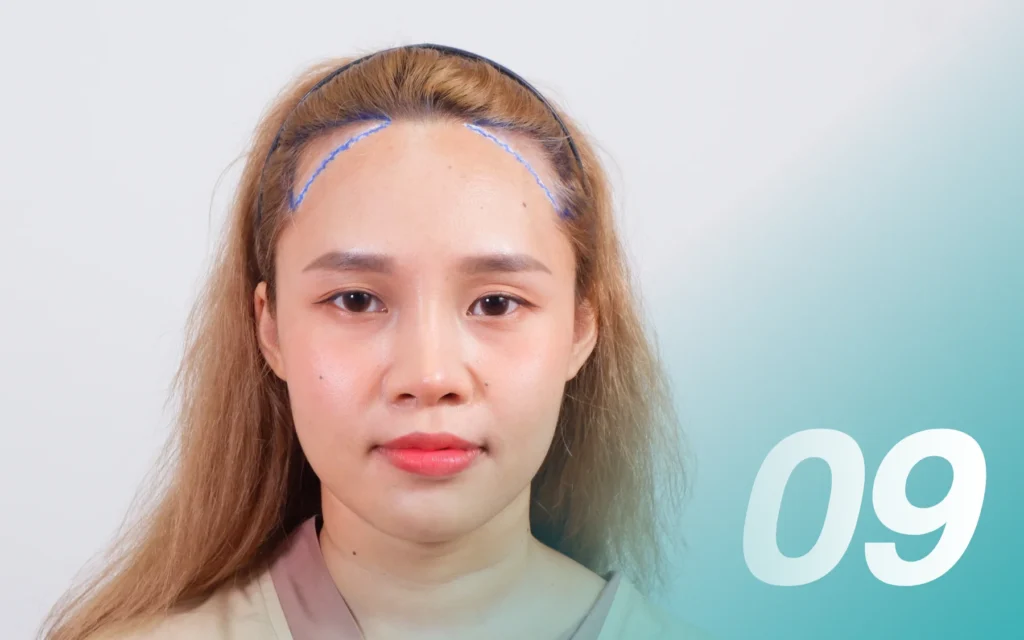
9. Can women get a hair transplant?

Yes, women can achieve beautiful results just like men. Most female patients seek transplants to lower a high hairline, soften their facial profile (Hairline Design), or treat thinning at the crown. The Non-Shaven FUE technique is particularly popular among women as it avoids the need to shave any part of the donor area.

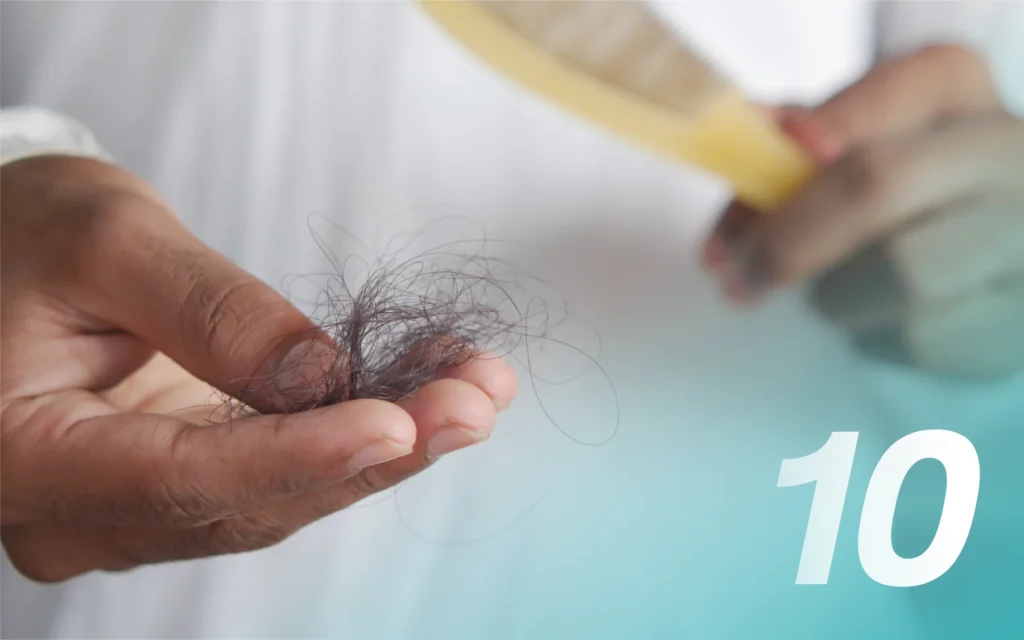
Q&A ปลูกผม แล้วผมจะกลับมาร่วงได้อีกไหม

10. Will the transplanted hair fall out again in the future?

Transplanted hair is considered permanent. The follicles are harvested from the back and sides of the head, which are genetically resistant to DHT—the hormone responsible for pattern baldness. Once relocated, these follicles retain their strength and will continue to grow for a lifetime, just like your natural permanent hair.

Other Helpful Questions

Beyond our top 10 FAQs, here are more essential facts you should know before deciding on a hair transplant.

Will the transplanted hair actually grow?

Definitely. Hair transplantation involves moving follicles from a donor area (back of the head) to the thinning or bald area. While hair won’t regrow in the extracted spot, it will grow permanently in the new location. The only cases where hair fails to grow usually stem from non-standard procedures or subpar equipment.

Can I have a transplant over a scalp tattoo (SMP)?

Yes, you can. However, results vary as tattooed skin differs from natural skin, which may slightly affect graft density. If the tattooed area isn’t too large, the final result is typically comparable to a standard transplant.

Is medication necessary after a hair transplant?

This depends on the doctor’s assessment. While the transplanted hair is permanent, your existing natural hair may still be at risk of thinning. Medication helps strengthen those original hairs; without it, you might eventually need another procedure to address further natural hair loss.

Can HIV-positive patients undergo a hair transplant?

Theoretically, yes. However, the viral load must be undetectable and non-transmissible. Please note that costs may be higher due to the extra-stringent safety protocols and specialized instrument handling required to protect both the clinical environment and our medical staff.

Can beard hair be used for a transplant?

Yes, but beard hair has a different texture and thickness than scalp hair. Additionally, beard grafts usually contain only a single hair, whereas scalp grafts often have 2-3 hairs. Therefore, beard hair is best used as a “filler” to increase overall volume rather than as a primary source.

Can I dye or chemically treat my hair after a transplant?

You can dye, perm, or heat-style your hair once the scalp has fully healed. We generally recommend waiting at least 3 months. If urgent, chemical treatments can be done starting from the 2nd month post-op.

Do I need a transplant for postpartum hair loss?

Postpartum hair loss is a normal hormonal condition and usually doesn’t require a transplant. We recommend waiting one year after childbirth. If hair loss persists or doesn’t improve by then, consult a specialist to explore restoration options.

What causes itching after a hair transplant?

Itching is a very common and normal part of the healing process, typically occurring within the first 1-2 weeks. It is caused by the body’s natural tissue repair or dry skin as the scabs begin to form and heal.

Real Patient Reviews & Results

Discover the transformation and heartfelt experiences of patients who chose to restore their hair and regain their confidence with Dr. Patty at Hairtran Clinic.

Dr.Patty Hairtran Clinic

Why Choose Hair Transplant with Dr. Patty

Dr. Patty (Pukpinya Jangjetriew, M.D.) is a highly experienced specialist with over 10 years of expertise and a proven track record of more than 4,000 successful cases. She has continuously refined her skills through advanced training with international hair restoration societies in the USA, Turkey, South Korea, and Malaysia.

As a distinguished member of both the Asian Association of Hair Restoration Surgeons (AAHRS) and the International Society of Hair Restoration Surgery (ISHRS), Dr. Patty applies her extensive knowledge to every step of the procedure. At Hairtran Clinic, she ensures that every patient achieves natural-looking results tailored specifically to their individual needs and goals.
Dr.Patty Hairtran Clinic
Scroll to Top